
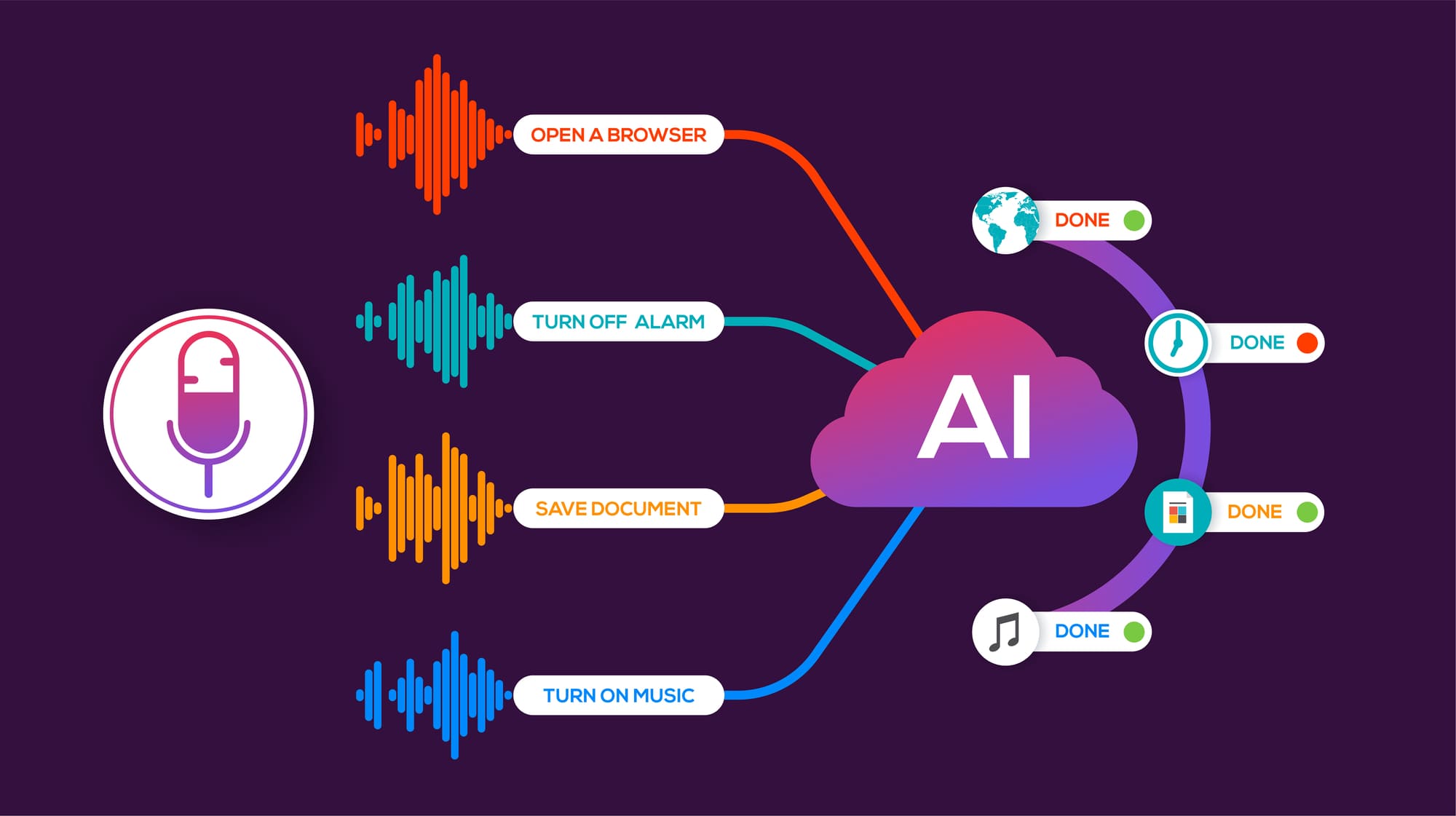
Search has quietly gone through one of its biggest transformations in two decades. A few years ago, ranking on page one of Google was the finish line. Today, a growing share of searches never even reach a traditional results page — they’re answered instantly by an AI-generated summary, or spoken aloud by a smart assistant before the user sees a screen at all.
If your business still treats SEO as “get to position one and wait for clicks,” you’re optimizing for a search engine that barely exists anymore. Voice search and AI Overviews have rewritten the rules, and understanding how AI Overviews affect SEO is no longer optional — it’s the difference between being cited as the answer and being invisible altogether.
This post breaks down what’s actually changing, why it matters, and how a modern SEO service in Dubai helps businesses adapt to a new discipline called answer engine optimisation (AEO).
The Search Landscape Has Split in Two
For years, SEO meant one thing: rank a page highly enough on Google that people click through to your website. That model still exists, but it now sits alongside a second, faster-growing model — where AI systems read the web on the user’s behalf and hand them a finished answer.
Two forces are driving this shift:
- AI Overviews — Google’s AI-generated summaries that appear above traditional organic results, pulling information from multiple sources to answer a query directly on the results page.
- Voice search — queries spoken into phones, smart speakers, and in-car assistants, where there is no results page at all, just one spoken answer.
Both trends share a common thread: the user gets an answer without necessarily visiting a website. That single shift is forcing marketers, business owners, and every SEO service provider to rethink what “ranking” even means.
How AI Overviews Affect SEO
Let’s get specific about how AI Overviews affect SEO, because the impact isn’t uniform — it varies by industry, query type, and how well your content is structured.
1. Clicks Are Being Redistributed, Not Just Reduced
When an AI Overview fully answers a query, some users won’t click through to any website — this is often called “zero-click search.” But it’s not simply a loss. Businesses that get cited inside the AI Overview gain visibility and trust even without a click, and often see higher-quality traffic from users who do click through, because they’ve already been pre-qualified by the summary.
2. Traditional Rankings Still Matter — But They’re Not Enough
AI Overviews are generated using a blend of Google’s index and real-time retrieval, which means strong traditional SEO (technical health, backlinks, relevance) still influences whether your content is even considered as a source. But ranking #1 no longer guarantees you’re the one quoted in the summary. Content that is clear, well-structured, and directly answers a question has a better chance of being selected — regardless of whether it’s the top blue link.
3. Featured Snippets Have Evolved Into Something Bigger
Featured snippets used to be the gold standard for capturing a quick answer. AI Overviews are essentially an expanded, multi-source version of that same idea — but now they synthesize information from several pages instead of lifting one snippet. This means your content needs to be quotable, factually precise, and easy for an AI system to extract and trust.
4. E-E-A-T Signals Carry More Weight
Google’s AI systems lean heavily on signals of Experience, Expertise, Authoritativeness, and Trustworthiness. Generic, thin, or AI-spun content without real expertise behind it is far less likely to be surfaced. Original insights, clear authorship, and demonstrable expertise now matter more than ever.
Voice Search: Answers, Not Links
Voice search compounds this shift because it removes the results page entirely. When someone asks their smart speaker or phone assistant a question, they typically get exactly one spoken answer — pulled from a single trusted source.
A few things make voice search fundamentally different from typed search:
- Queries are conversational. People type “best Italian restaurant Dubai” but ask, “What’s a good Italian restaurant near me that’s open now?”
- Answers are short and singular. There’s no scrolling through ten options — just one answer wins the moment.
- Local intent is huge. A large share of voice queries are local — “near me,” “open now,” “closest,” “how do I get to.”
- Featured, structured content wins. Voice assistants pull from content that’s already well-organized: FAQs, structured data, and pages that directly answer a specific question in a sentence or two.
For businesses, this means your content strategy needs to shift from “rank for a keyword” to “be the single best answer to a specific question.”
What Is Answer Engine Optimization (AEO)?
This is where answer engine optimization (AEO) comes in — and it’s quickly becoming the natural evolution of SEO.
So, what is answer engine optimization, exactly? In simple terms, AEO is the practice of structuring and writing content so that AI systems — like Google’s AI Overviews, ChatGPT, Perplexity, Siri, and Alexa — can easily understand, extract, and present it as a direct answer to a user’s question.
Where traditional SEO focused on ranking pages, AEO focuses on becoming the cited source inside an AI-generated answer. It’s not a replacement for SEO — it’s an extension of it, built for a search environment where machines read your content and hand a summarized version to the user.
Core Principles of AEO
- Answer-first structure: Lead with a clear, concise answer before expanding into detail. AI systems favor content where the answer isn’t buried under three paragraphs of preamble.
- Question-based headings: Structuring content around real questions (“How does X work?”, “What is Y?”) mirrors how people actually search — especially by voice.
- Structured data and schema markup: FAQ schema, HowTo schema, and clear metadata help AI systems parse your content accurately.
- Conversational tone: Content written the way people speak — natural, direct, and specific — performs better in voice and AI-summarized results.
- Authoritative sourcing: Citing data, using original research, and demonstrating real expertise increases the likelihood of being trusted as a source.
- Concise, scannable formatting: Short paragraphs, bullet points, and bolded key terms help both readers and AI crawlers extract meaning quickly.
AEO doesn’t discard the fundamentals of good SEO — technical performance, backlinks, and site structure still matter. What changes is the writing and content architecture layered on top of that foundation.
Additionally, Point Blanc Media clarifies the distinction between GEO and SEO, highlighting the vital role that all three approaches—SEO, AEO, and GEO—play in today’s digital landscape.
Why Businesses Need a Modern SEO Service
Adapting to this new landscape isn’t something most businesses can do with occasional blog posts and outdated keyword lists. It requires a strategic, ongoing approach — which is exactly why partnering with an experienced SEO service has become more important, not less.
A capable SEO in 2026 does more than chase keyword rankings. It typically includes:
- Technical SEO audits to ensure your site is crawlable, fast, and structured correctly for both search engines and AI crawlers.
- AEO-focused content strategy, building pages and articles designed to be pulled into AI Overviews and voice answers.
- Schema markup implementation so your content is machine-readable and easy for AI systems to extract accurately.
- Local SEO optimization, critical for voice search’s heavy “near me” intent.
- Ongoing content production that balances human readability with AI-friendly structure.
- Performance tracking that goes beyond rankings to measure visibility inside AI-generated answers and voice results.
This is a moving target. Search engines are updating their AI systems constantly, and what worked six months ago may already be outdated. A dedicated SEO partner keeps your strategy current instead of reactive.
Why Location-Specific Expertise Matters: SEO Service in Dubai
Search behavior isn’t universal — it’s shaped by local language patterns, competition, and how people in a specific market actually search. This is where a specialized SEO service in Dubai offers a distinct advantage over a generic, one-size-fits-all provider.
Dubai’s digital market has a few characteristics that make local expertise especially valuable:
- A highly multilingual audience, where English and Arabic queries often coexist, and voice search behavior can differ meaningfully between them.
- Intense local competition across sectors like real estate, hospitality, retail, and professional services, where being the AI-cited answer for “best [service] in Dubai” carries real commercial weight.
- High mobile and voice assistant usage, driven by a tech-forward, mobile-first population.
- Google Business Profile and local pack visibility, which increasingly intersects with AI Overviews for “near me” and location-based queries.
A generic SEO strategy built for a different market won’t account for these nuances. A dedicated SEO service in Dubai understands local search intent, competitive dynamics, and the specific way AI Overviews surface local businesses — giving companies a sharper, more relevant edge than a broad, unlocalized approach ever could.
Content Is Still King — But It Has to Be Built Differently
None of this works without genuinely good content. AI systems are remarkably good at identifying thin, repetitive, or poorly structured writing — and they’re built specifically to avoid citing it. This is why an optimized content writing service has become a core part of any serious SEO strategy, rather than an optional add-on.
What separates optimized content from ordinary blog writing?
- It’s built around real search intent, not just keyword density. Every page should answer a specific question a real person is asking.
- It’s structured for extraction, using clear headings, short answer blocks, and logical flow that both humans and AI systems can follow easily.
- It demonstrates genuine expertise, incorporating data, examples, and insights that generic AI-generated filler content can’t replicate.
- It’s optimized for both typed and spoken queries, anticipating the more conversational phrasing used in voice search.
- It includes structured data, making it easier for search engines and AI systems to parse the content’s meaning and context.
An experienced optimized content writing service doesn’t just write for keywords anymore — it writes for the algorithms and the humans reading the final summary, balancing clarity, authority, and structure in every piece.
7 Practical Steps: Tracking Your New Visibility Metrics
Ranking #3 on Google used to be a clear, measurable win. Today, that same page could be driving real business value by being cited inside an AI Overview or read aloud as a voice answer — activity that a traditional rank tracker will never show you. If you’re only watching keyword positions, you’re measuring a shrinking slice of your actual visibility.
Here’s how to start tracking the metrics that matter now:
- Monitor AI Overview appearances. Manually check your top target queries in Google Search to see if an AI Overview appears and whether your site is cited as a source. Several rank-tracking tools have started adding AI Overview tracking — if yours hasn’t, it’s worth asking your provider when it’s coming, or switching to one that already offers it.
- Watch “impressions without clicks” in Search Console. A rising number of impressions alongside flat or declining clicks on a query can actually be a good sign — it often means your content is being surfaced in an AI Overview or featured snippet without generating a click. Don’t read this pattern as failure by default; investigate it.
- Track branded search volume over time. When users see your business cited in an AI Overview or hear it as a voice answer, many will search your brand name directly afterward, even without clicking through. A steady rise in branded queries is a strong indicator of growing AI-driven visibility.
- Test your own voice queries regularly. Ask Google Assistant, Siri, and Alexa the exact questions your customers would ask, and note who gets read out as the answer. Do this monthly for your priority queries — voice answers can shift as assistants update their sources.
- Audit which pages get cited, and why. When you do find a page appearing in an AI Overview or voice answer, study its structure — heading format, answer placement, schema markup — and replicate that pattern across other pages targeting similar questions.
- Set up structured data monitoring. Use Search Console’s Enhancements reports to confirm your FAQ, HowTo, and Article schema are valid and being read correctly — broken schema is one of the most common reasons content gets skipped over as an AI source.
- Track local pack and “near me” visibility separately. For location-based queries, keep an eye on Google Business Profile insights and local pack rankings alongside AI Overview citations, since the two increasingly influence each other in local search results.
Combined, these signals give you a much more accurate picture of your search presence than rankings alone — one that reflects how people are actually finding, hearing, and trusting your business today.
The Bottom Line
Search is no longer a single results page — it’s a layered system of AI summaries, spoken answers, and traditional links working together. Understanding how AI Overviews affect SEO, embracing answer engine optimization (AEO), and adapting your content for voice search isn’t a future consideration — it’s a present-day necessity.
Businesses that partner with a capable SEO service, especially one with real, localized expertise like an SEO service in Dubai, and invest in an optimized content writing service built for this new era, will be the ones showing up when it matters most — whether that’s a spoken answer from a smart speaker or a citation inside an AI Overview.
The businesses that adapt now won’t just survive this shift. They’ll be the ones the algorithms — and the customers — trust as the answer.


 info@pointblancmedia.com